
Scent & Herbal Tea Guides
Educational overview of lavender scent, warm foot soaks, and caffeine-free tea as optional evening habits — with safety notes, not product sales or health claims.
Not medical advice. Essential oils and herbs discussed here are common household or store-bought items. We do not sell them, endorse specific brands, or claim they treat any condition. Always follow label directions and consult a licensed professional for personal health questions.
Lavender as an Evening Scent Anchor
True lavender (Lavandula angustifolia) is a popular choice in home aromatherapy because of its familiar floral aroma. Some people use it as a short, timed scent cue at the end of the day — not as an all-night background smell. Individual preferences vary; what feels pleasant to one person may not suit another.
For home diffusion, a common approach is three to five drops in an ultrasonic diffuser filled with water, run for fifteen to twenty minutes in a ventilated room, then switched off. Over-diffusing can cause headaches or scent fatigue. Ventilate briefly afterward if the aroma feels strong.
Topical use requires dilution: about six drops of lavender oil per ounce of carrier oil (such as jojoba or sweet almond) for a roughly two-percent blend. Apply to inner wrists or the back of the neck only on intact skin, after a patch test. This site describes general practices; it does not evaluate product quality or suitability for you.
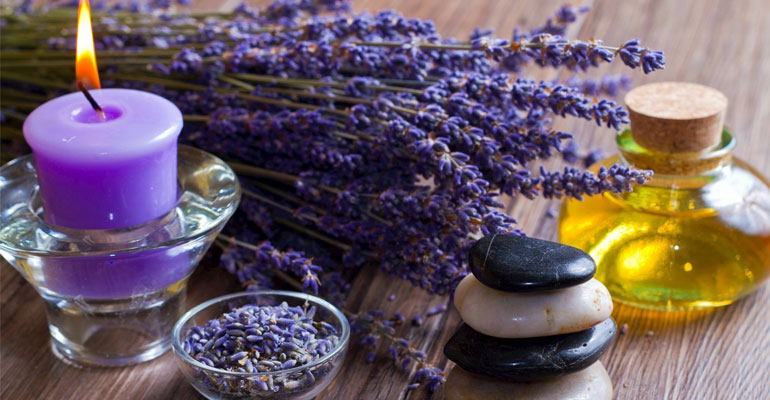
Warm Foot Soaks: A Common Evening Habit
Many evening guides suggest a warm foot soak as a simple, screen-free pause. Some people dissolve magnesium chloride flakes in warm water (around 100 to 104°F); others use plain warm water or Epsom salt. The warm water itself is often described as the main comfort factor — a few quiet minutes off your feet.
A typical approach: dissolve about one cup of flakes in a basin of warm water and soak feet for ten to fifteen minutes while seated. A mild tingling sensation can occur on first use for some people. Rinse and pat dry if residue feels sticky.
Topical magnesium sprays are another option some readers use on calves and feet. Start with a small amount to assess skin tolerance. If you have kidney conditions or take prescription medications, ask a licensed healthcare provider before adding new supplements or topical minerals to your routine.
- Water temperature: Warm enough to feel soothing, never scalding — overheating raises alertness instead of lowering it.
- Timing: Complete soaks at least thirty minutes before lying down so your core temperature can drop naturally.
- Frequency: Three to five evenings per week is a reasonable starting rhythm; daily use is fine for most healthy adults.
- Combination: Pair soaks with lavender diffusion in the same room for layered sensory input.
Herbal Blends: Chamomile, Lemon Balm & Passionflower
- Chamomile (Matricaria chamomilla): Mild, apple-like flavor. Steep one tablespoon of dried flowers in eight ounces of hot water for eight minutes. Best consumed forty-five to sixty minutes before rest.
- Lemon balm (Melissa officinalis): Bright, citrus-herb notes. Combines well with chamomile at equal parts. Avoid if you have thyroid conditions unless cleared by a provider.
- Passionflower (Passiflora incarnata): Earthier profile. Use sparingly — half a teaspoon per cup — and rotate with other herbs to prevent flavor fatigue.
- Blend ratio: Try two parts chamomile, one part lemon balm, and a pinch of passionflower. Adjust to taste over a week of trials.
Herbal caffeine-free teas are often part of quiet evening rituals. The act of steeping, holding a warm cup, and sitting still can be as important as the ingredients themselves. Research on individual herbs is ongoing and mixed; we share preparation ideas, not health claims.
Source dried herbs from reputable suppliers with clear labeling. Store in airtight containers away from light. Never combine herbal teas with alcohol or prescription sedatives without professional guidance. We do not sell tea or herb products.
For caffeine sensitivity, choose blends labeled caffeine-free. Rooibos and honeybush are neutral bases before adding chamomile or similar herbs.
Safety & Responsible Use
- Patch-test diluted essential oils on your inner forearm twenty-four hours before broader application.
- Keep all oils and herbs out of reach of children; many smell appealing but are not safe to ingest.
- Discontinue any herb or oil that causes skin redness, digestive upset, or respiratory irritation.
- Consult a pharmacist about herb-drug interactions if you take blood thinners, sedatives, or thyroid medication.
Quality Checklist
Choose oils with the Latin botanical name on the label, GC/MS test reports available from the supplier, and dark glass bottles. For herbs, look for organic certification or wildcrafted sourcing with transparent harvest dates. Avoid products with synthetic fragrance oils marketed as "aromatherapy."
Events Calendar
| Date | Event | Format |
|---|---|---|
| June 12, 2026 | Intro to Lavender Diffusion & Safety | In-person workshop |
| July 10, 2026 | Herbal Tea Blending for Wind-Down Routines | In-person workshop |
| August 21, 2026 | Magnesium Soaks: Preparation & Timing | Live online session |